Case Study
Vietnam’s Buried Billions
Turning municipal waste into an investable asset class.
The Hidden Billion-Dollar Opportunity
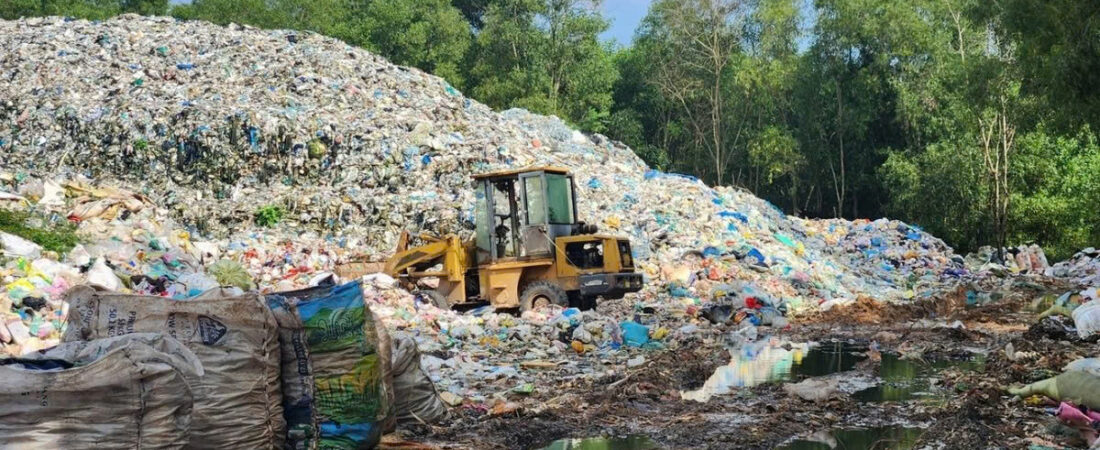
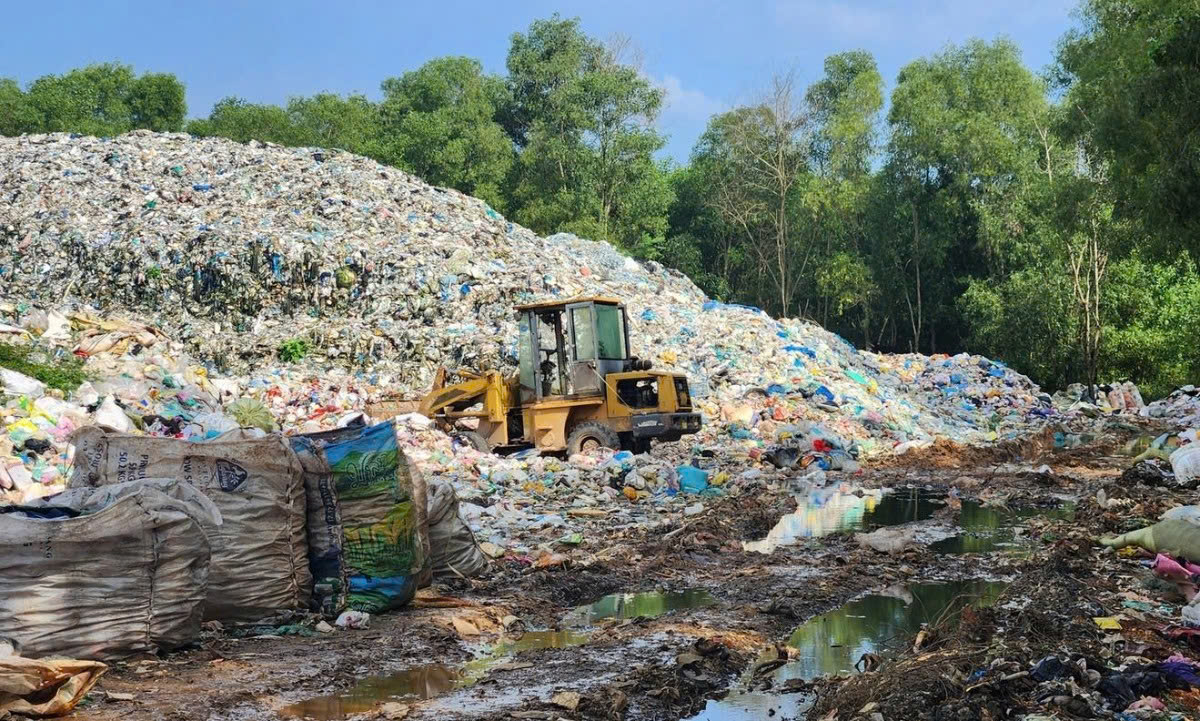
Vietnam currently generates more than 67,000 tons of municipal solid waste (MSW) every day, with waste volumes increasing by 10–16% annually as urbanization and consumption continue to grow. Yet most of this waste is still managed using traditional disposal methods.
Around 65–71% ends up in landfills, and of the country’s more than 1,000 landfill sites, only about 30% meet national sanitary standards. Recycling captures only 20–25% of the waste stream, leaving a substantial amount of recoverable material unused.
This represents not only an environmental problem but also a missed economic opportunity. Every ton of waste sent to landfill contains materials that could be recovered, processed, and sold back into the economy. Organic waste can be transformed into biofertilizer, combustible fractions into refuse-derived fuel (RDF), and plastics into recycled raw materials. Instead of creating value, these resources are sent to landfills, where they generate little value while creating long-term environmental costs.
The scale of this opportunity is already reflected in the market. Vietnam’s waste management industry is estimated to be worth between US$2.2 billion and US$6.8 billion in 2025, with forecasts projecting annual growth of 6.5–10% through the early 2030s. As regulations become stricter and demand for circular economy solutions increases, waste management is evolving from a public service into a rapidly growing resource recovery industry.
Vietnam’s municipal waste stream should be viewed not as a disposal challenge, but as an emerging asset class waiting to be captured.
Why the Incumbent Model Can’t Scale
For decades, landfilling and waste-to-energy (WtE) incineration have been the backbone of Vietnam’s waste management system. While these approaches have helped cope with rapidly growing waste volumes, they are becoming increasingly difficult to sustain. Rising waste generation, limited land availability, and stricter environmental regulations are exposing the limits of the current model.
Landfills are running out of space
Major landfill sites serving Hanoi and Ho Chi Minh City, including Nam Son and Da Phuoc, are approaching or exceeding their designed capacity. Several facilities have experienced temporary shutdowns or emergency responses in recent years because of environmental and operational risks. Expanding landfill capacity is becoming increasingly challenging as suitable land becomes scarcer, particularly around fast-growing urban and tourism centers.
Incineration requires significant capital investment
Modern waste-to-energy plants typically require tens or even hundreds of millions of dollars to build, while permitting and construction can take years. Once operational, their business model relies heavily on electricity sales under regulated feed-in tariffs. This creates a single-source revenue structure that can make projects financially vulnerable and difficult to scale.
Communities are demanding cleaner solutions
Across Vietnam, waste treatment projects have increasingly faced public concerns over odor, air emissions, truck traffic, and environmental impacts. Community opposition has delayed or disrupted several projects, highlighting that technical feasibility alone is no longer enough. Future waste infrastructure must also earn public trust and meet higher environmental expectations.
These challenges point to a broader issue: Vietnam needs a waste treatment model that does more than simply dispose of waste. The next generation of facilities must recover valuable resources, generate multiple revenue streams, and operate with a smaller environmental footprint.
A Market Ready for Change
Vietnam’s regulatory landscape is increasingly supporting circular waste solutions. Extended Producer Responsibility (EPR) requirements, national waste reduction targets, and the country’s Net Zero 2050 commitment are creating strong incentives to divert waste from landfills and recover valuable resources. At the same time, the development of Vietnam’s carbon market is expected to improve the financial viability of projects that reduce methane emissions and increase material recovery. Together, these policies are transforming waste management from an environmental obligation into a growing compliance-driven market, creating favorable conditions for innovative technologies.
The Technology: Biology as the Core, Delivered as an Integrated System
At the heart of CirBE’s solution is a simple idea: waste should be treated as a resource rather than something to be disposed of. Instead of burning waste or burying it in landfills, the system uses a proprietary biological process to recover valuable materials from mixed waste streams.
This approach is particularly relevant in Vietnam, where waste is often collected with limited source separation. Rather than relying on perfectly sorted inputs, the technology is designed to process mixed municipal waste, making it more compatible with existing collection systems and reducing the need for extensive upstream infrastructure.
The process combines mechanical separation with biological conversion in five stages:
First, incoming waste is shredded and screened to create a more uniform feedstock. Air classification (wind shifting) then separates lighter materials, such as plastics and paper, from heavier fractions. After a second shredding stage, the organic portion enters the biological treatment process, where proprietary microbial cultures accelerate decomposition without combustion or chemical additives.
Rather than producing a single output, the system recovers value across multiple material streams. Organic waste is converted into biofertilizer; combustible materials are processed into refuse-derived fuel (RDF) and solid recovered fuel (SRF) pellets, while plastics and other recyclable materials are recovered for reuse. Materials that cannot be biologically processed are separated for appropriate downstream recycling or recovery.
This integrated approach transforms a traditional waste treatment facility into a resource recovery platform. Instead of relying on disposal or electricity generation alone, each ton of waste becomes a source of multiple marketable products. The result is a more circular system that reduces landfill dependence, lowers greenhouse gas emissions, and creates greater economic value from the same waste stream.
The Business Model — Multiple Revenue Lines from One Input
Unlike traditional waste treatment facilities that typically rely on a single source of income, CirBE takes a different approach. The platform generates multiple revenue streams from the same waste input, creating a more resilient and diversified business model.
Municipalities, industrial facilities, and commercial waste generators pay for waste treatment.
Biofertilizer, RDF/SRF fuel pellets, recycled plastics, and other reusable materials.
Potential carbon-credit revenue from reducing landfill methane and diverting organics from disposal.
Licensing or subscription-based operating models can support expansion without owning every facility.
The first source of revenue comes from gate fees, where municipalities, industrial facilities, and commercial waste generators pay for waste treatment. Once the waste enters the facility, valuable materials are recovered and transformed into marketable products, including biofertilizer, RDF/SRF fuel pellets, recycled plastics, and other reusable materials. As Vietnam’s carbon market develops, additional revenue can be generated through carbon credits by reducing landfill methane emissions and diverting organic waste from disposal. Over time, the technology can also be deployed through licensing or subscription-based operating models, allowing CirBE to expand without owning every treatment facility.
Another advantage is the platform’s flexibility. Rather than relying solely on municipal solid waste, the same biological process can treat a wide range of organic waste streams, including agricultural residues, livestock manure, aquaculture by-products, food and beverage processing waste, and industrial wastewater—all without chemical additives. This diversified feedstock reduces dependence on a single customer segment and opens opportunities across multiple industries.
By combining diversified revenues, flexible feedstocks, and resource recovery, the business model creates value beyond waste treatment. Each ton of waste becomes the starting point for multiple products and income streams, improving both financial resilience and environmental impact. This shift is what makes the model scalable and commercially attractive.

The Next Frontier: AI-Powered Circular Waste Systems
CirBE’s innovation does not end with biological waste treatment. As waste management systems become more decentralized, diversified, and resource-focused, they also become increasingly data-intensive. The next stage of the circular economy will not be driven by biology alone but by data and AI.
Around the world, leading cities are already demonstrating how AI can transform waste management. Digital platforms, IoT sensors, and machine learning are being used to monitor waste generation, optimize collection routes, improve recycling rates, and reduce operational costs. These technologies are shifting waste management from a reactive public service to an intelligent, data-driven infrastructure.
Vietnam is well positioned to follow this transition. As new resource recovery facilities are deployed, every stage of the waste value chain—from collection and sorting to biological treatment and product distribution—will generate valuable operational data. Turning this data into actionable insights is where AI can create the greatest impact.
Predictive process optimization
The composition of municipal waste changes across seasons, regions, and industries, affecting biological treatment performance and product quality. AI models can continuously analyze feedstock characteristics and operating conditions to recommend adjustments that improve recovery rates, increase efficiency, and reduce processing costs.
Automated monitoring, reporting, and verification
As Vietnam develops its carbon market, projects that reduce landfill methane emissions will require transparent and verifiable emissions reporting. AI-powered monitoring systems can automate data collection, improve traceability, and simplify carbon credit verification, making environmental claims more reliable for regulators and investors.
Smarter collection logistics
Instead of operating fixed schedules, collection routes can adapt to real-time waste generation, traffic conditions, and facility capacity. This reduces transportation costs, fuel consumption, and unnecessary emissions while ensuring that treatment facilities receive a more stable and predictable supply of feedstock.
Looking Ahead: From Vietnam to a Smarter Circular Economy
Realizing this opportunity will require collaboration across sectors. Technology developers can continue improving resource recovery processes, while municipalities and waste operators can accelerate the adoption of circular treatment systems. Investors can support business models that generate both environmental and economic returns, and policymakers can provide the regulatory certainty needed for long-term investment.
Vietnam is uniquely positioned to lead this transition. With a rapidly growing economy, strong policy momentum, and increasing demand for sustainable infrastructure, the country can serve as a living laboratory for next-generation circular waste solutions. Success in Vietnam would not only address domestic waste challenges but also provide a scalable model for many countries across Southeast Asia and the broader Asia-Pacific region that face similar pressures.
The future of waste management is no longer about finding more places to dispose of waste. It is about building intelligent systems that recover resources, reduce emissions, and create lasting economic value. By combining biological innovation with AI-driven decision-making, Vietnam can demonstrate how circular economy principles can become both environmentally sustainable and commercially viable.
Turn waste streams into circular value
Discuss a municipal, agricultural or industrial waste challenge with CirBE.